by Webmaster | Oct 15, 2026 | Electrification & catenary, Technical blog
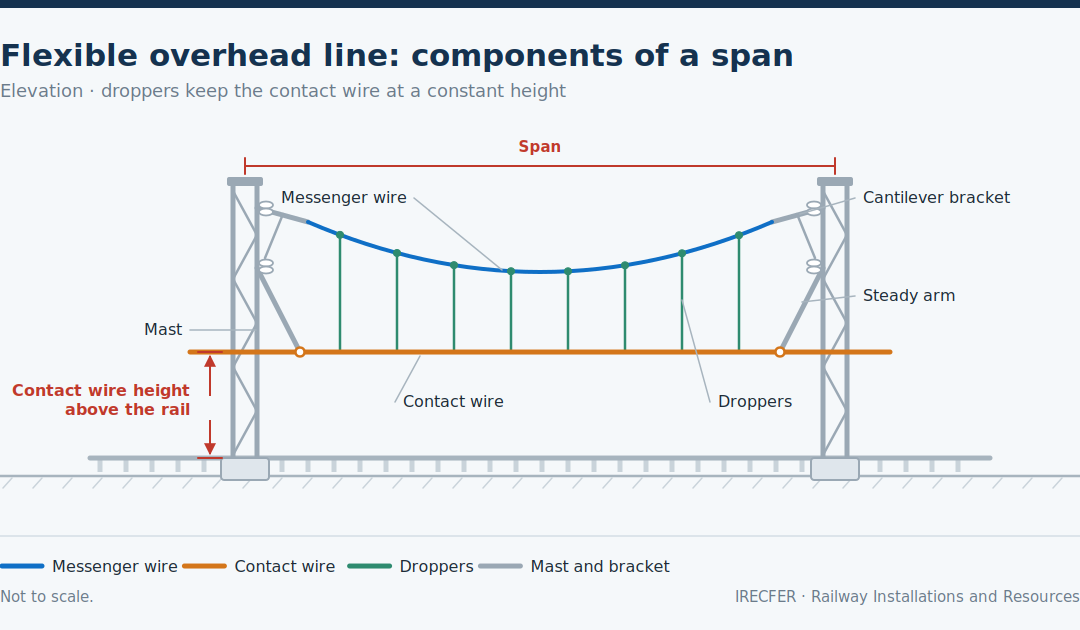
An electrified line almost never fails because of the wire itself, but because of the geometry with which that wire has been hung. Poorly distributed stagger, unbalanced droppers or a jammed balance weight all end up producing the same symptom: loss of contact,...
by Webmaster | Oct 1, 2026 | Electrification & catenary, Technical blog
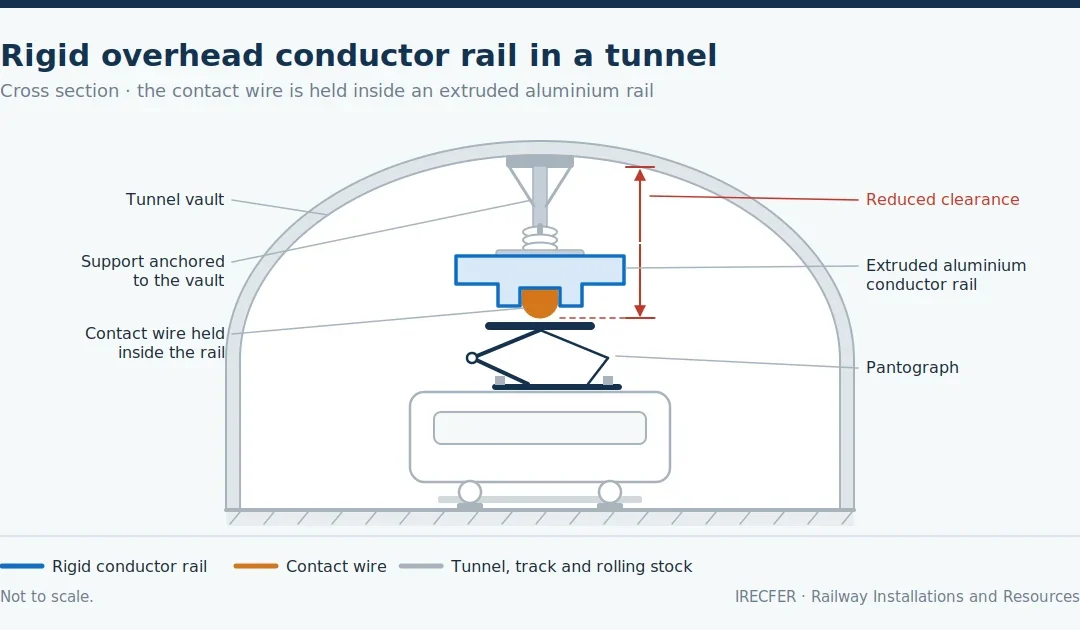
In a metro tunnel where the crown sits just a few centimetres above the train roof, conventional electrification simply does not fit: there is no height for a messenger wire, droppers and a contact wire with its sag, and no room for the tensioning equipment at the...

by Webmaster | Apr 24, 2025 | Electrification & catenary, Technical blog
Cantilevers in the Railway Industry: Function, Types and Applications In the railway industry, every component plays a key role in guaranteeing the safety and efficiency of the system. One of these essential elements is the cantilever, a key structure in the...

by Webmaster | Mar 27, 2025 | Electrification & catenary, Technical blog
Disconnectors: Key to the Safety and Efficiency of Rail Transport In the world of rail transport, safety and efficiency are essential to guarantee that rail networks operate continuously and without interruptions. One of the key components in achieving these...
by Webmaster | Dec 20, 2023 | Electrification & catenary, Technical blog
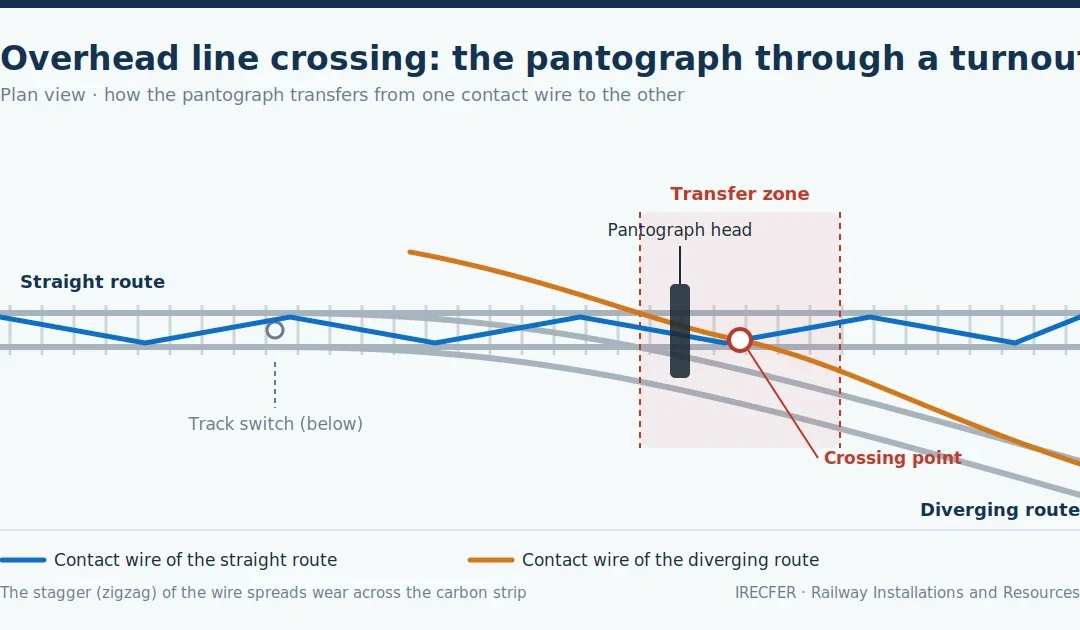
On an electrified line, trains draw current through the pantograph, which runs against the contact wire of the overhead line along the whole route. Where the track is single and straight, that relationship is simple: one wire, one geometry and continuous contact. The...

